
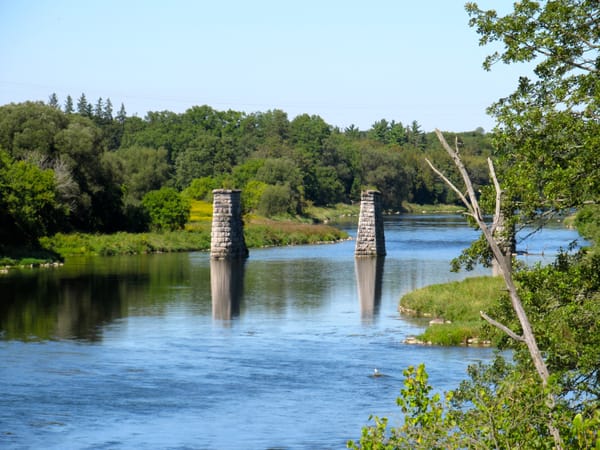
Warmer temperatures and drier conditions seen in the later part of the summer prompted the Grand River Conservation Authority to ask people to conserve water.
The GRCA’s Grand River Low Water Response Team last week announced a Level 1 Low Water response. They are urging water users to reduce consumption voluntarily by 10 per cent.
The level 1 conditions mean flows in the river system are less than 70 percent of their normal summer rates and/or precipitation has been measured at less than 80 per cent of the average amount.
The agency’s Mark Andrews told The Observer that the monitoring team looks at various indicators in making its determinations.
“We are seeing low water conditions. We’re seeing reduced precipitation and stream flows at a number of our locations throughout the watershed. Not all of them, but enough of them that it makes it prudent to declare a level 1,” he added of the recent call for conservation.
They’ll be watching to see if conditions improve. If instead they worsen, there’s the possibility of calls for more cuts to water usage, he noted.
The Ontario Low Water Program was established by the Ministry of Natural Resources. The response teams are typically coordinated by conservation authorities.
“We’re kind of a secretary for the team. And then we also have municipal involvement, and some of the bigger ones like agricultural representatives, people from the aggregate industry, golf courses and other large water users like that,” Andrews explained.
The voluntary water usage reduction is mainly targeted at municipalities, aggregate operations, golf courses, water bottlers, farms for irrigation and private users. But every little bit helps, noted Andrews, saying that residents can also do their part.
“I would maybe refer them to their local municipal water-use bylaws. Your local municipality probably has some information on our website about water conservation, but it’s basic stuff like reducing your outdoor water use in particular,” he added.
“We are not asking people to flush their toilets less or take shorter showers, although that can help, but it’s things like lawn watering, washing your car – any kinds of outdoor water use, if you can avoid that or minimize that, that’s always helpful.”
Andrews added that the GRCA have not noticed any long-term climate trends that have been affecting water levels, but did say that climate change might have an effect.
“Over the last however many years we’ve been monitoring, things like climate change are expected to impact our climate. Ironically, the information that I’ve seen suggests that our watershed will probably receive more annual rainfall as we move through climate change.”
But there is a problem that comes with this potential increased rainfall, which is that it is will fall during the wrong time of the year, he added.
“We’ll get more rain in the winter and possibly longer, drier summers. As the water may become more of an issue with climate change than it has been in the past but, again, that remains to be seen.
“Though we might be getting more rain, it will come during the winter and spring and not when we need it for crop irrigation,” he said.
“The bottom line is just be mindful of how much water you’re using, and try to reduce where possible.”
More information can be found online at www.grandriver.ca.