Though winter weather is hopefully still months away, environmental groups and municipal leaders are already looking for provincial action on salt pollution.
The Ontario Salt Pollution Coalition (OSPC), a group of municipal leaders, NGOs, and concerned citizens, is advocating for an approach to mitigate the effects of road salt impacts called “limited liability.”
That’s a solution proposed by the snow and ice management industry represented by Landscape Ontario. The snow plow industry has faced increasing insurance costs over the past years to cover possible slip and fall lawsuits.
“A lot of companies’ insurance rates were astronomical, and that drove a lot of people out of the industry,” said Claire Malcolmson, executive director of the Rescue Lake Simcoe Coalition.
What the industry is proposing is that snow plow operators and site owners both would follow prescribed rules to standardized operational best management practices. In return, they would have their liability for slip-and-fall lawsuits limited.
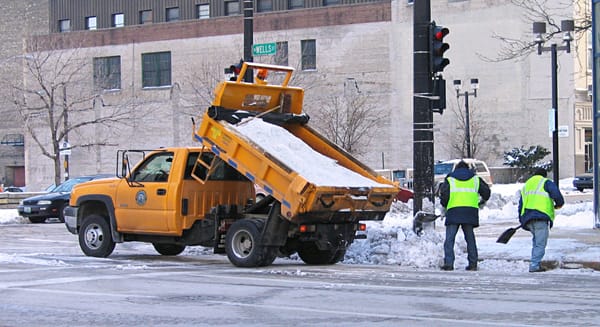
That, proponents say, would reduce salt application rates, save money on salt expenditures, and reverse skyrocketing insurance costs for contractors. Currently, there are no provincial standards for salt use.
Currently, 19 municipalities have passed resolutions for the provincial government to form a committee to look into limited liability for salt use, a list that includes Waterloo.
“Reducing salt pollution has long-term environmental cost savings, which we should all support, but it also would reduce the cost of infrastructure repair, which is a significant concern for municipalities,” said City of Waterloo Coun. Julie Wright in an OSPC release.
Canada’s Ecofiscal Commission estimated the economic and environmental damage of the salt at $4.8 billion per year, including $2 billion in Ontario.
“Let’s stop throwing money away and protect the environment,” added Malcomson.
She noted the effect that winter salt has on a variety of species in waterways around the province. One of those is the plankton at the bottom of the food chain, which can not survive in the increasingly salty water.
To some, this might not seem like a big problem, but Malcomson stresses that taking out a part of the food chain will have a larger effect on the whole ecosystem, leading to the likes of lower fish stocks, including muskie.
Currently, they are also looking for the province to review whether the guidelines they have for acute and chronic exposure to salt are appropriate for Ontario lakes, Malcomson added, calling for rules that make the guidelines mean something.
“We’re asking the province to bring experts together to advise it on how better to protect our environment and water from salt pollution. This could include advice on salt management plans, best management practices and on ecologically protective water quality standards.”
The OSPC has been coordinating and advocating for two years, and continued that work in Ottawa this week at the Association of Municipalities of Ontario’s annual meeting.
“Municipal officials have more power than they think, especially when we act together. The province is hearing us. The more cities and townships that pass resolutions calling for provincial action on salt pollution, the closer we’ll get to real policy action,” said Dani Lindamood of Water Watchers in the release.