
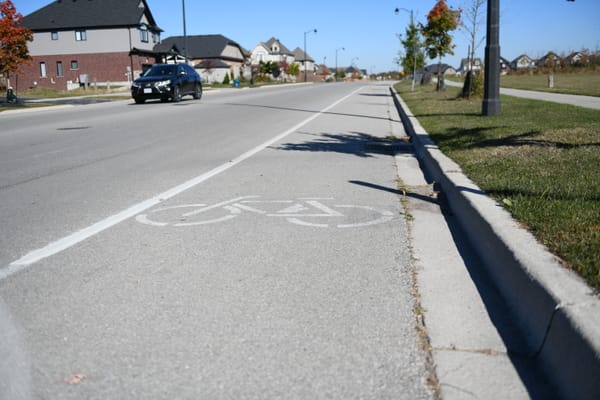
A provincial plan forcing municipalities to seek permission to build new bike lanes met with a critical reception from the mayors of Woolwich and Wellesley.
Under the proposed legislation, the townships would need to demonstrate that planned cycle routes will not have a “negative impact on vehicle traffic” before getting the green light.
In announcing the changes, Ontario Premier Doug Ford also said his government plans to remove any lanes that bring motorists to a “standstill.”
But Woolwich Mayor Sandy Shantz said municipalities are better placed to make such decisions themselves as she questioned the motivations for the proposal.
“I don’t know the intention of the province to approve bike lanes as it will potentially be a bottleneck,” she told The Observer.
“I think local municipalities should be in the best position to decide the best places for active transportation.
“That said, not everyone will agree with those decisions no matter what level of government makes them.”
Wellesley Mayor Joe Nowak echoed the point that municipalities are better placed to make such decisions, noting, “We’re the first contact for any wants, desires or concerns” of residents.
He found the province’s announcement, which he said “came out of the blue” on October 15, very strange.
“I suspect there has been no consultation with municipalities, whether it be through the [Association of Municipalities of Ontario] or any other organizations,” he added.
“So just to drop it on our lap without discussion, it’s just not what I would expect.”
Unlike the cities of Kitchener and Waterloo, neither Woolwich nor Wellesley currently have any barrier-separated, cyclist-only bike lanes along their roadways, the kind often criticized for not being used sufficiently.
However, both mayors, who are also Region of Waterloo councillors, said they support more cycling in their townships and across the wider area.
“Some of the lanes aren’t maybe used as much as people would like to see them used, but they still have their place because the more we can do to cut down gasoline vehicles or any vehicle, as far as that goes, the better for the environment,” said Nowak, who also noted that bike use in Wellesley is more recreational than for commuting.
In Woolwich, the township last year published its active transportation master plan, which calls for around $11.5 million to be spent over a decade on cycling schemes.
This includes $9.7 million to pave shoulders, $91,300 on signed routes and $1.7 million on multi-use paths, which can be used by both pedestrians and bike riders.
Shantz said there was a lot more she would like to do for cyclists, but that there were limits to how much the township can do and that motorists also need to be taken into account.
“In making local decisions, we should be considering cycling and automobile traffic,” she said. “In a perfect world, cycling lanes would be separate from driving lanes, with a corridor of their own.
“We don’t live in a perfect world so we need to do our best to accommodate changing modes of transportation.”
Noting that alternative forms of transport now include e-bikes and e-scooters, she added: “I expect there will be constantly evolving and changing ways to get around.
“All users need to respect each other and the rules of the road as we all have the right to be here and to be safe.”
The debate over bike lanes has become increasingly heated since the government revealed that municipalities will need to produce five years’ worth of data proving existing bike lanes are not impeding vehicles in order to keep them.
Janice Jim, the vice president of the Cycle Waterloo Region advocacy group, refutes the claim that that cycle routes cause traffic jams.
“It’s not based on data. There are a lot of studies by planners that show bike lanes make things safe for everyone,” she said.
Jim also believes that creating safe spaces for cyclists can help relieve congestion and is actually good value for money.
“Bike lanes cost less tax dollars to maintain. Maintaining a stretch of road is actually really expensive because cars cause more wear and tear,” she added.
However, many motorists in the region have also vented their frustration at seeing a proliferation of these facilities since the pandemic.
“When you drive in Kitchener, its downtown is a mess, and for what?” said Susan Boht of Elmira, who regularly commutes to the city.
“The dedicated bike lanes go unused. You can sometimes drive for miles and not see a single cyclist, but car traffic is being slowed up because of them.
“I just don’t know what some of these politicians are thinking. They’re not thinking about what the real needs of actual people are. Have any of them noticed what Canadian weather is like? For most of the year, it’s not bike weather, that’s for sure.
“So I’m glad we’re finally seeing some common sense about the bike lane issue from the province.”