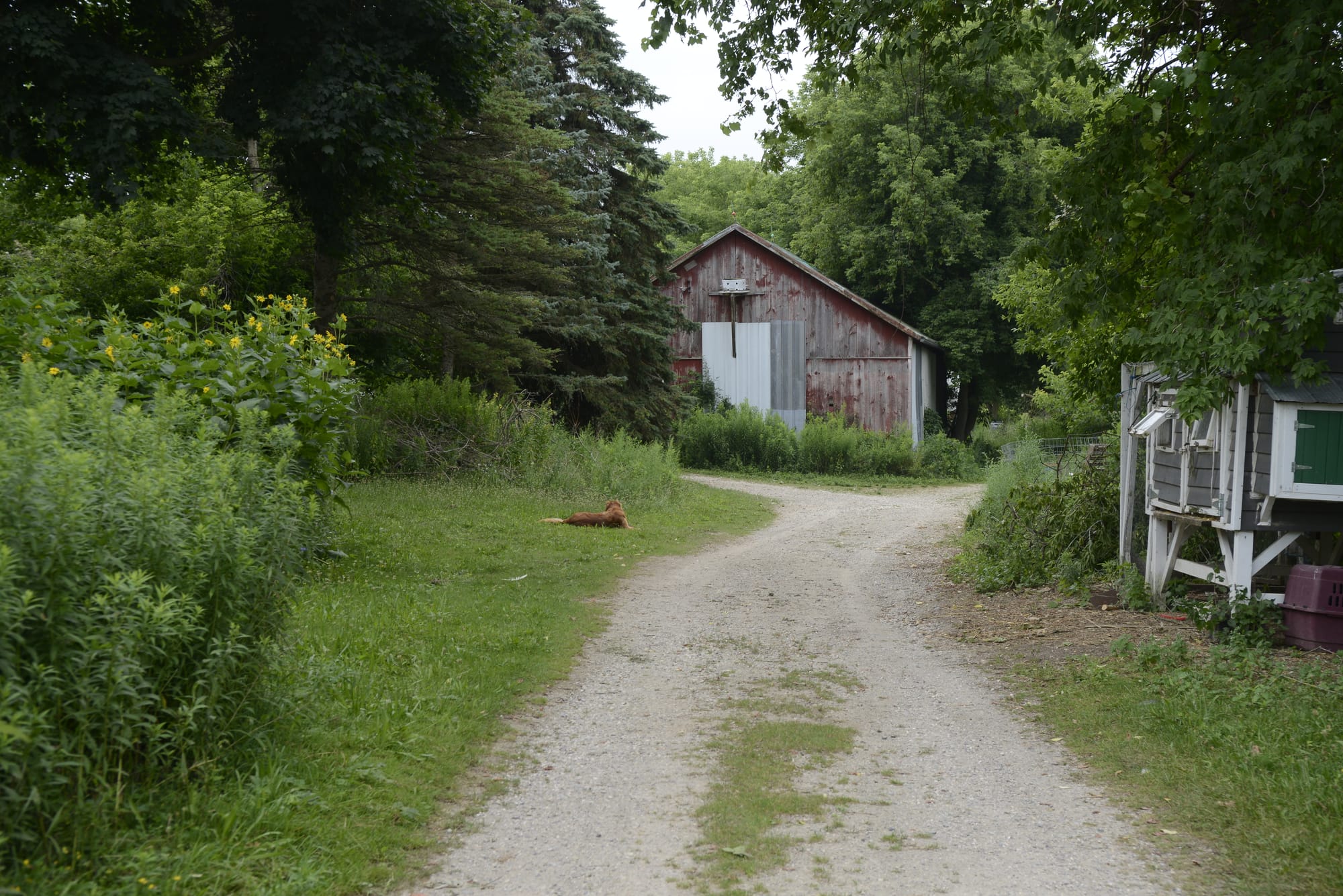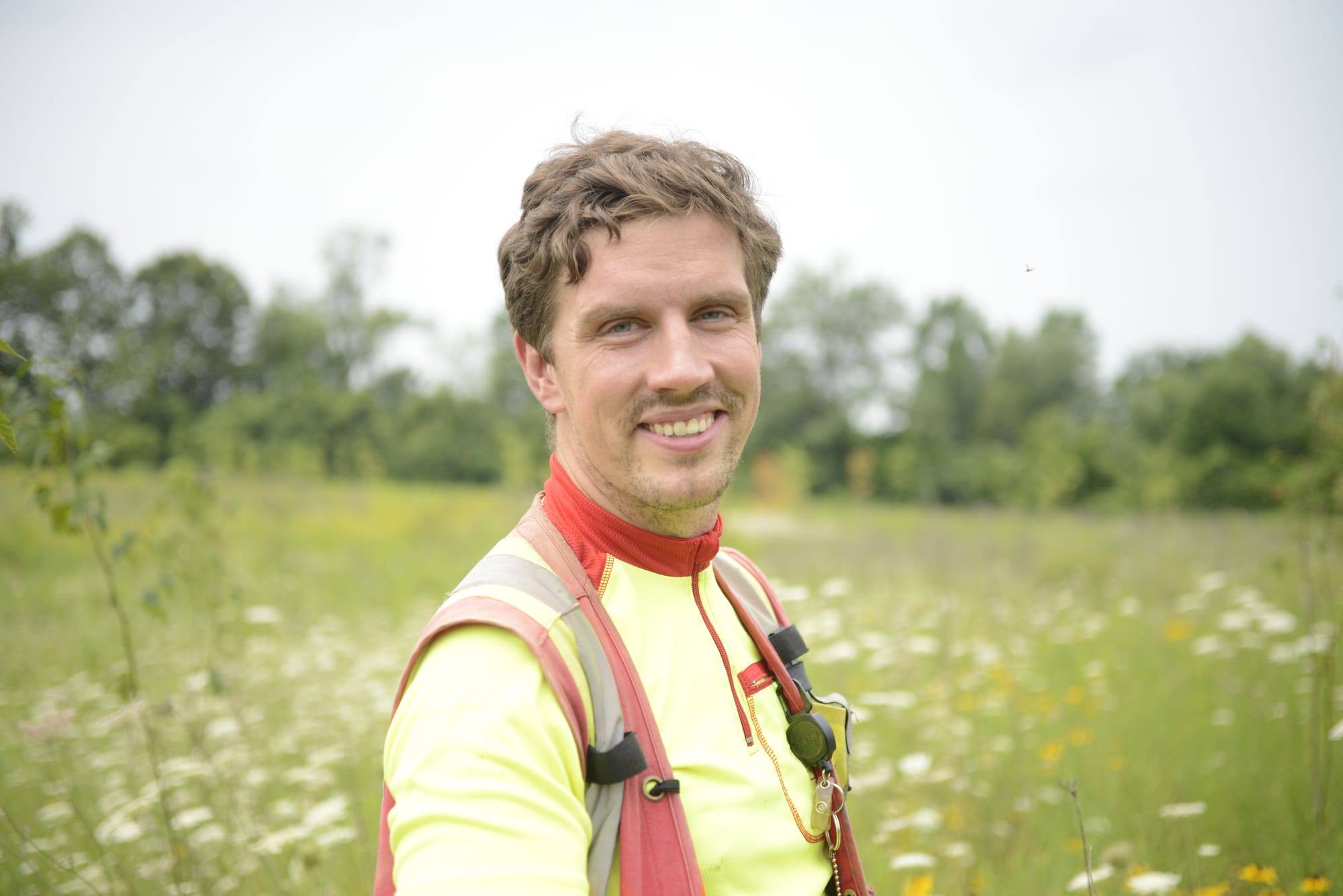
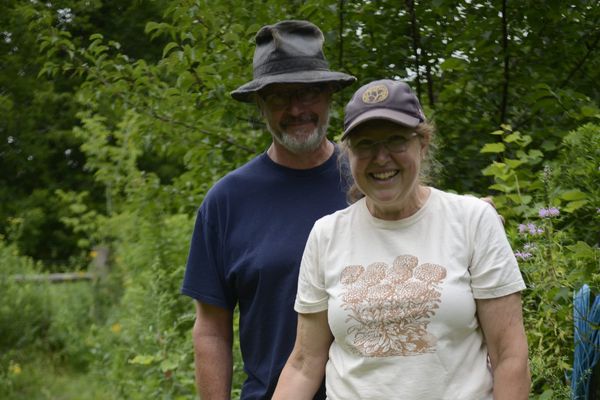
Not everyone looks at a depleted, dusty gravel pit and sees a field of dreams. But nearly 20 years ago, local residents Janet Cox and Roger Hogan looked past the barren crater and envisioned a flourishing natural habitat. Today, that dusty basin has been completely transformed into Stone Meadow Farm, a thriving biodiversity haven and working regenerative homestead.
For Cox and Hogan, the industrial site provided an unconventional path to a lifelong dream. Like many aspiring farmers, they originally envisioned a traditional countryside setup.
“We had wanted a farm with a stone house and 100 acres, and then when we were young, and reality hit, we ended up on half an acre,” said Cox.
“We were like, ‘Oh, that wasn’t so bad. And it turned out that for gardening, half an acre is actually quite a bit.”
The couple’s journey toward the property began in 1991 when they moved into a small house in the village of Maryhill. Raising their two children alongside a small flock of backyard chickens, they grew familiar with the surrounding landscape. During local walks, Cox found herself drawn to the nearby active gravel pit, convinced it held untapped potential.
“They were up here, sort of a few weeks a year, crushing and hauling, and we thought, wouldn’t it be nice to live there,” said Cox.
Opportunity knocked when the mining operation unexpectedly hit a layer of clay. With no more accessible gravel left to extract, the pit became functionally useless to the operators. Beside the mining site sat a rental house owned by the company, though it had seen much better days.
“The house was a complete disaster. There were two bachelors living there, but the one collected motorcycle parts. To them [gravel pit owners] it was a ruined house with tenants and no gravel,” said Cox.
In 2003, Cox and her husband decided to make an offer and bought the place.
Cox recalled her excitement at the decision, adding that the previous owners even “accepted our first offer.”
After moving onto the property, the couple set to work first fixing up the house, then focusing on the gravel pit transformation. Planting trees around the pit, the couple left the inside to be a prairie habitat.
Cox also transformed the property into a biodiversity haven for pollinators with native plants and wildflowers such as bergamot and black-eyed Susans. Around the farm, trees important for butterflies were planted, such as hop trees, which are important for the nesting of swallowtail butterflies.
Planting in the area did not come without challenges. One of the primary ones was wildlife.
“We planted the apple trees in the first year or two, and deer came along and smashed them to smithereens,” said Cox.
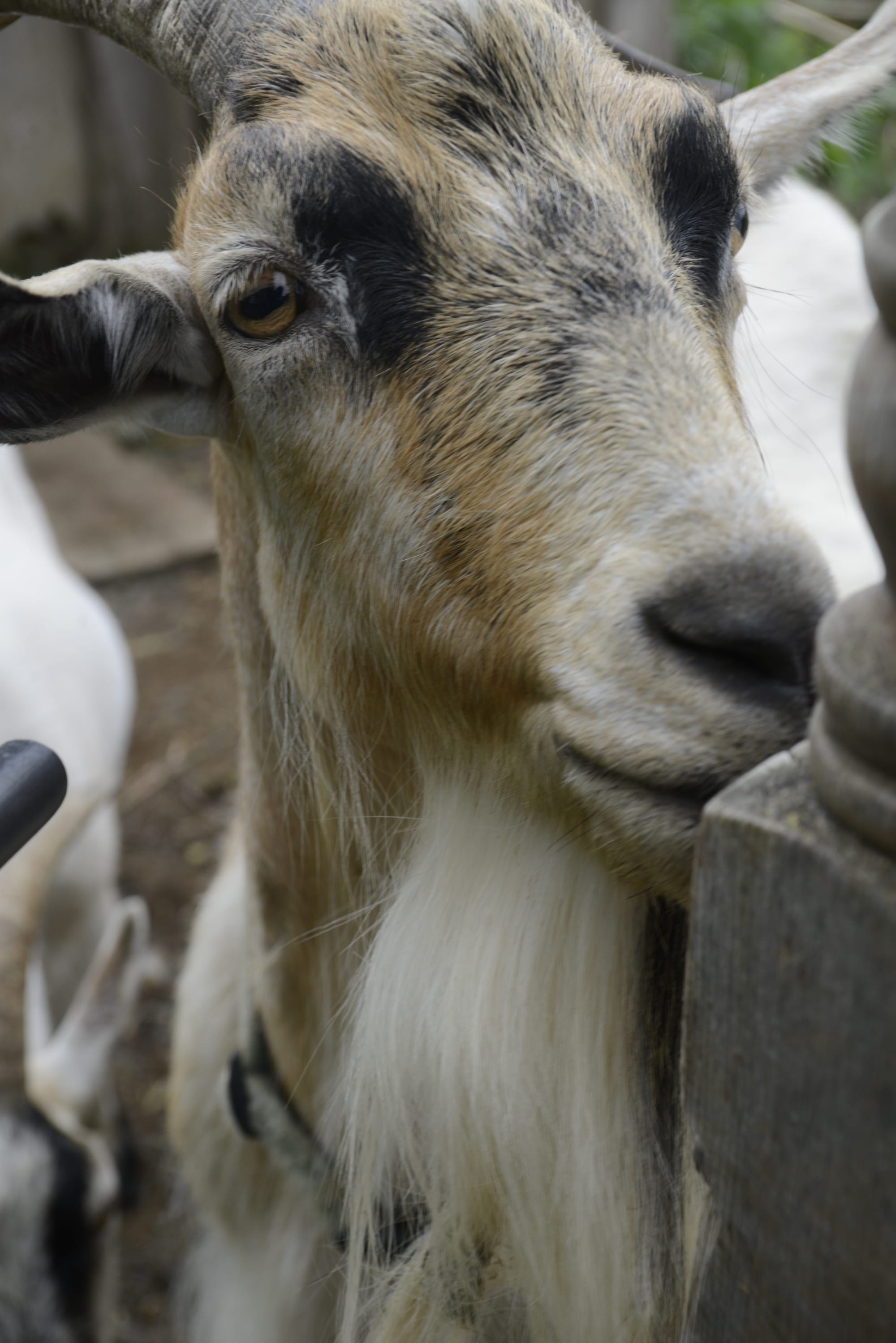
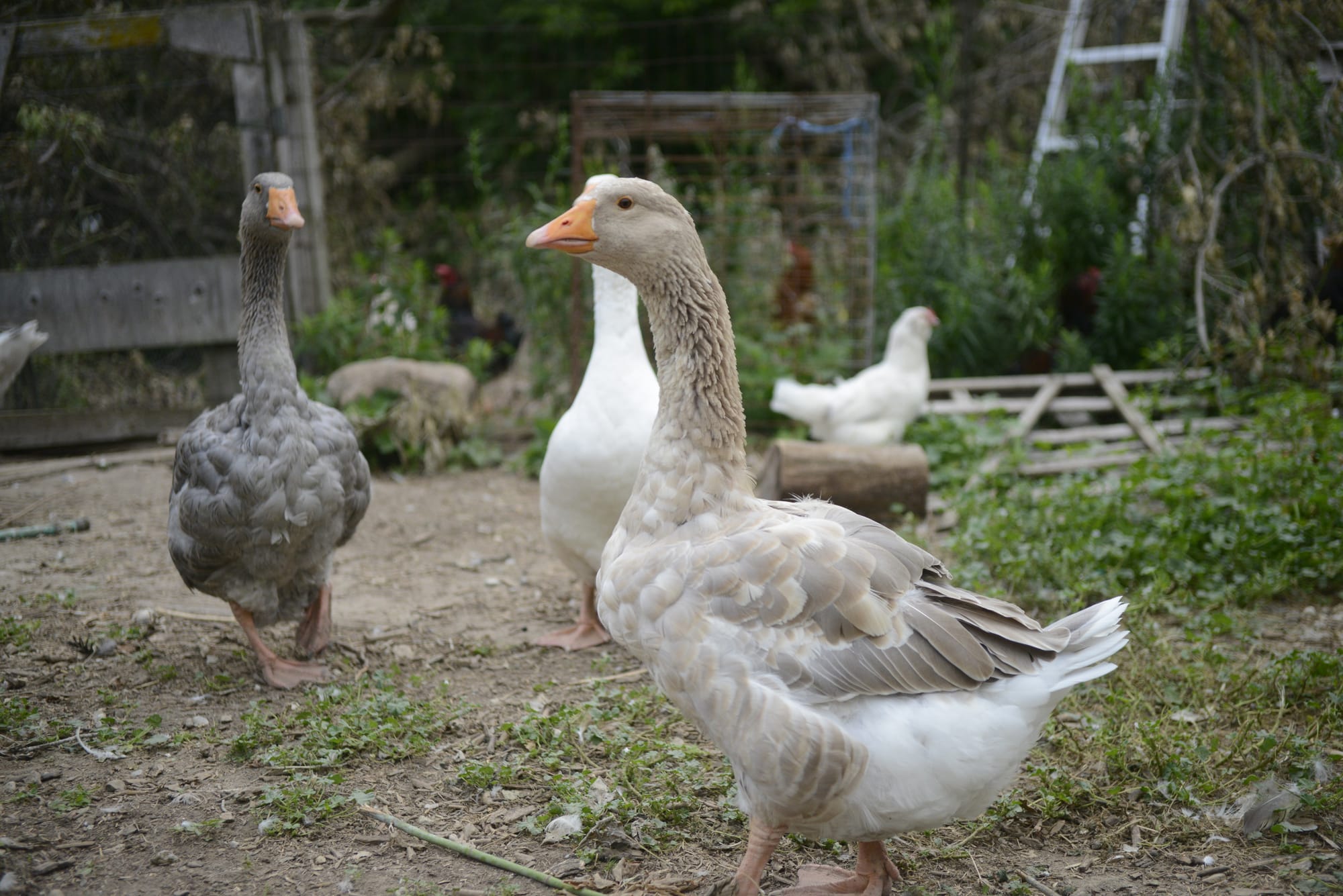
Other restoration efforts on the property include building some ponds. Beyond wildlife conservation, Stone Meadow Farm functions as an active model for regenerative agriculture. Today, the property is home to a diverse roster of livestock, including chickens, geese, turkeys and a small herd of cattle.
Instead of keeping the animals entirely separate from the wild spaces, Cox and Hogan use their livestock to actively rebuild the landscape’s topsoil.
“We have a small herd of cattle, and one of the ideas is to do regenerative agriculture. So the cows, as they eat, spread manure. Their hooves work the organic matter and the manure into the ground, and it builds soil way faster than not grazing,” explained Cox.
For both Cox and Hogan, who grew up in the urban landscape of Toronto, the farm is the realization of a decades-old ambition. While they once dreamed of a simple log house, Cox’s deepest inspiration stems from her childhood memories of her grandfather.
“It’s been a long journey, but my grandfather was an agricultural representative in Niagara. He worked with fruit growers on their orchard health and I just thought my grandfather was the coolest person ever. From the time I was little, we would go visit them there, and they had a massive garden. And he had another property called the Ranch, that had a little remnant of Carolinian forest and a swamp,” said Cox, adding that as a kid it was her dream to live like her grandfather.
Now, decades later, Cox’s dream has materialized in Maryhill. For her, the farm is an important part of being a good steward to Mother Nature.
“We’re finding ways that we can feed ourselves excellent local food while feeding all the other species that ought to be here, and instead of just planting trees or flowers, we’re trying to build ecosystems,” said Cox.
“I really feel like we’re just sort of passing through here. We’re stewards, and I want this place to be a better place for all the organisms here from my passing through it and the time that I’m the steward.”