Heat pumps are gaining popularity in Canada for their high efficiency and reduced fossil fuel emissions. To encourage more people to switch to heat pumps in their homes, the Nith Valley EcoBoosters are hosting an upcoming workshop titled “Get Pumped: A Better Way to Heat and Cool Your Home.”
Set for May 26, the workshop will take place at the Wilmot Recreation Complex. The session will feature local experts who will discuss the pros and cons of the technology.
One of the local experts is Diane Stanley-Horn, the driving force behind the local “Get Pumped Waterloo Region.” The initiative is dedicated to promoting the uptake of heat pumps in homes.
“When I retired a few years ago, I wanted to get more involved in groups that were involved with climate change. I was just really interested in how to motivate and help facilitate some of the transitions that most people will need to make at some point. Heat pumps are one of the big things that residential homeowners can change to have a really big impact on climate,” said Staney-Horn.
In Canada, buildings are the third-largest source of greenhouse gas emissions. Switching to a heat pump significantly reduces home emissions by 50 to 80 percent, depending on the model.
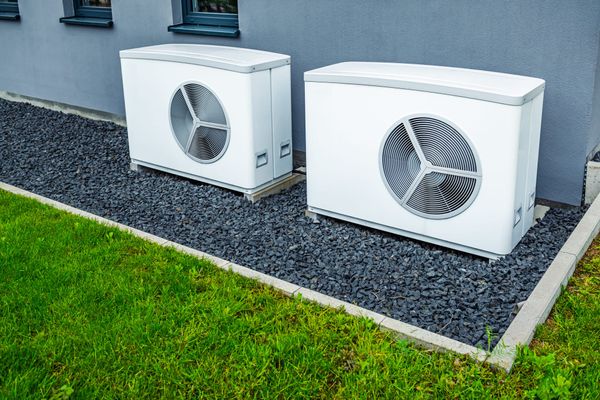
Heat pumps use electricity and refrigerant to transfer heat rather than generate it, moving warmth from the air or ground into the home during winter and reversing the process for cooling in summer.
“People who have heat pumps really like them. They’ve come a long way, and the market is changing quickly. Recently, cold climate air source heat pumps that have really good performance at low temperatures have become more available in Canada,” said Staney-Horn.
There are many different types of heat pumps available, with the Cold Climate Air Source Heat Pump specifically designed for northern climates. The newest version is rated to minus-31 degrees Celsius. An advantage to heat pumps is their higher efficiency. Since they transfer heat rather than generating it, they achieve efficiency rates of 200-540 per cent, providing 2-5.4 units of heat for every one unit of energy consumed. By comparison, high-efficiency gas furnaces top out below 100 per cent, producing between 0.80 and 0.98 units of heat for every 1 unit of energy.
“They’re super energy efficient. They’re usually smart appliances – they communicate with thermostats, and sometimes can be controlled through apps. They’ve got lots of good features that make them really modern, great technology and they even out the temperature in your home so that you don’t have a blast of hot and cold spots in your house,” said Staney-Horn.
The feedback she often hears from homeowners who switch to heat pumps is that their homes are much more comfortable.
“Primarily because there’s a really nice, steady heat maintained. You don’t have to do setbacks at night, you just keep it at a steady level,” she explained.
Modern heat pumps often run continuously at a low speed, constantly circulating air to prevent the hot-cold temperature swings associated with furnaces and single-stage heat pumps. They particularly excel in basements because they are better at dehumidifying air, removing excess moisture, and preventing dampness, mould and foundation damage.
“Most of the modern equipment has what’s called variable speeds, and that operates more like a dimmer switch on a light instead of an on and off switch. And so, it can just really easily dial up or dial down just a little bit in order to keep things where they need to be,” said Stanley-Horn.
“Then, in addition to that, there are some options for managing humidity as well in your home, which can be really nice, because sometimes in the wintertime, it can get quite dry. And so that’s another thing that people report back, is that they’ve got a nice humidity level as well in the house in the winter.”
For people who aren’t yet ready to completely give up the gas, there are hybrid options. Homeowners can add a less powerful heat pump to their existing equipment.
“That way, they can get the advantage of really efficient cooling in the summer, as well as some heating in the shoulder seasons. So, in the spring and fall, when you normally might turn on your furnace, you could use the heat pump easily,” said Stanley-Horn.
Anyone interested in learning more information about the upcoming workshop can visit the Nith Valley EcoBoosters website at nvecoboosters.com.