
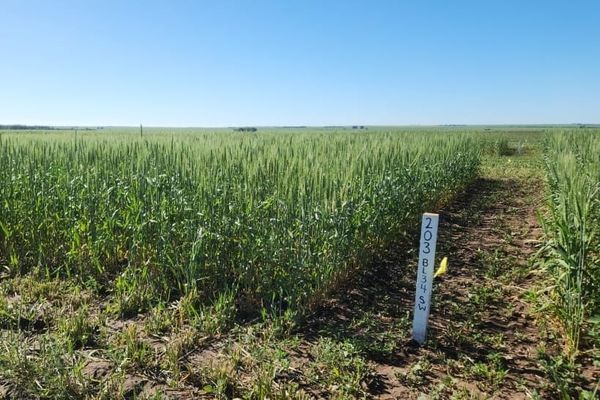
Cathy Holtslander, director of research and policy at the National Farmers Union, is one of many agricultural advocates questioning why the organic research plots at Saskatchewan’s Swift Current Research and Development Centre were destroyed so quickly.
“That is definitely the question. Why would they take this really irreversible harm to the program?” said Holtslander.
The Organic and Regenerative Research program at the Swift Current Research and Development Centre was Canada’s only research program on organic agriculture. The 19-year program studied soil health, crop rotation and disease suppression in organic systems on a series of small plots.
Earlier this year, in January, the AAFC announced it was one of the programs being cut to reduce costs and reallocate resources. The AAFC is also closing seven research facilities and cutting roughly 665 jobs to save $27 million annually in operational costs.
The final blow to the physical research site came on June 9 and 10. AAFC crews plowed the research fields at Swift Current and seeded the area with a standard wheat crop, effectively ruining the ongoing research projects.
The decision to till the land occurred just weeks after a coalition of 26 farming organizations-including the National Farmers Union-sent a joint letter urging the AAFC to pause any actions that would compromise the integrity of the program’s long-term field trials.
The AAFC faces heavy criticism for failing to give researchers adequate time to collect final data from the active plots. Because the small research plots were plowed over entirely, the physical boundaries dividing them were permanently erased.
“Then it was just like a field rather than an area with small plots in it, before giving the science staff a chance to retrieve what data they could from the deeper levels, by knowing exactly where those plots used to be,” said Holtslander.
“Now it’s been basically contaminated through mixing the soil and planting a non-experimental crop on it, and there was no scientific data attempted to be retrieved from that land before this operation was done, so now basically this site is not useful for organic research, the data has been destroyed.”
Holtslander questioned the motivation for plowing the field and how much money the AAFC would actually save by axing the Swift Current program. While AAFC funded the core infrastructure and overhead, the research projects relied heavily on external funding and partnerships to function.
“It was supported by other funding too, and what was invested by these outside funders was destroyed by Agriculture and Agri-Food Canada. So, it was not only disregarding the program, but also the external funders that supported it, as well as the farmers who supported it,” said Holtslander.
Industry advocates warn that the cancellation leaves a massive gap in Canadian agricultural development. One of the program’s core initiatives was testing crop varieties specifically bred to thrive in organic, low-input production systems.
Organic producers require plants specifically bred for organic environments. In contrast, most commercial seeds are developed with conventional farming methods in mind, which rely heavily on synthetic fertilizers and chemical pesticides.
Multiple agricultural and organic organizations actively supported and collaborated on research programs at the organic plots, including the Bauta Family Initiative on Canadian Seed Security.
“We nationally had trials for wheat varieties developed by farmers in organic conditions that were being evaluated at that site, and we had trials planned for this year that are all getting cut because of this really short-sighted decision, and it’s just devastating across all of agriculture,” said Aabir Dey, the director of the Bauta Family Initiative.
The Bauta Family Initiative began its collaboration with Swift Current in 2025, marking its first formal collaboration with an AAFC research site.
“It was awesome, because they had access to so much infrastructure and were able to get seed more easily. There’s so much benefit to working with a public institution like that,” said Dey, adding that the loss of the research plots is a big loss for agricultural organizations, organic or not.
“Virtually all agricultural organizations across the country are in opposition to these cuts, and they’ve been putting a lot of pressure on the federal government to reverse this decision,” said Dey.
Jenn Pfenning, family owner and operator at Pfenning’s Organic Farm in New Hamburg, said that every time she thinks about the cuts, it is like a “kick to the gut.”
“Anybody who thinks a lot about fair and just access to food, and about the future, we’ve all been saying for a very long time that public research is critical, and it is becoming more and more critical as there is less and less of it,” said Pfenning, adding that there has been a privatization of food research.
“Farmers need to be able to grow food in order to feed people, so you know what we have is an essential need that is being left to for-profit corporate entities, instead of being underpinned and shepherded, regulated effectively by our government.”
For Holtslander, one of the particularly troubling aspects of the cuts to the Swift Current program and the research facilities closing was the lack of consultation prior. Research facilities and research centers were asked to provide a list of the programs affected by the cuts only after the cuts had already been made, meaning cuts were made without knowing the effects.
“We’ve had rounds of cuts before, when Harper was in power and when Martin was in power, there were these austerity measures taken, but the department had internal consultations and discussions around how they would carry out these cuts, and try and figure out operationally and strategically how they could deal with this reduction in people power. But in this case, it was imposed completely without any consultation, even within the department, let alone within the agriculture sector. Nobody was consulted,” said Holtslander.
“I think it really does beg the question of why has the government been so aggressive in stopping this research from continuing? Basically, the question I ask is, ‘Whose interests are served?’ Because they’re certainly not the farmers’ interest.”