
Residents are being invited to roll up their sleeves this weekend as the Township of Woolwich Environmental Enhancement Committee (TWEEC) hosts its annual fall buckthorn pull in Elmira and St Jacobs.
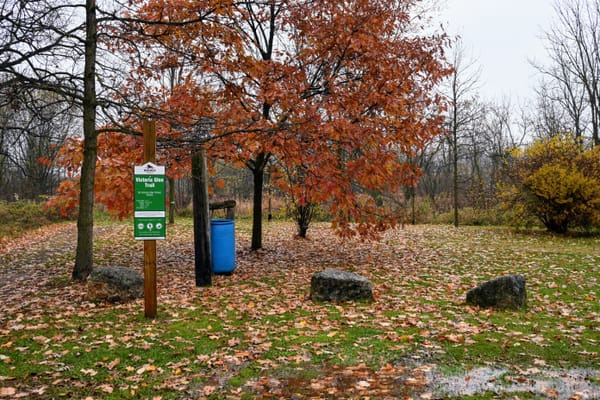
The volunteer event runs Saturday from 1 to 3 p.m. at two locations: Victoria Glen in Elmira (28 Victoria Glen St.) and the Health Valley Trail behind the fire station at 35 Albert St. E. in St. Jacobs. Attendees are asked to bring work gloves and dress for the weather.
Common buckthorn, a shrub introduced from Eurasia in the late 1800s, spreads aggressively through bird droppings and forms dense thickets that block sunlight and crowd out native trees, shrubs, and wildflowers. In Ontario, it is listed as a noxious weed under the province’s Weed Control Act.
The species can be found from Saskatchewan to Nova Scotia, and presents challenges along roadsides, riverbanks, farm fields, mature forests, and hydro corridors. Once established, buckthorn can be difficult to remove, making early detection and ongoing control important.
Identifying the shrub is often easiest in autumn, when its smooth, dark-green leaves persist long after native trees have turned colour and dropped. Buckthorn typically grows two to three metres tall, features small yellow-green flowers, and produces clusters of black, berry-like fruit. Many of its branches end in a short, sharp thorn.
According to TWEEC committee member Jenny Soehner, community efforts are underway throughout Elmira to pull younger plants before they mature.
The Elmira Nature Reserve has seen large-scale mechanical removals and replanting, while local residents and community groups, including the Lions Club, have been addressing infestations along neighbourhood trails. Work is also ongoing in forested areas near Whipporwill Drive and Sandy Hills Drive.
“It’s really important for people to be able to identify buckthorn and get rid of it if they see it, because it chokes everything out,” Soehner said. “Once you learn to recognize it, you start seeing it everywhere, and it’s kind of heartbreaking.”
Buckthorn fruit contains few nutrients and acts as a laxative for birds, which speeds the spread of seeds across long distances. When younger plants are pulled, volunteers typically hang them upside down on nearby branches to dry out the roots and prevent re-sprouting.
“So if people are walking through the forest and see a bunch of uprooted plants hanging, that means the buckthorns are being controlled,” Soehner said. “Don’t worry, we’re not destroying the forest.”
Attendance at last year’s buckthorn pull reached roughly 15 volunteers at Victoria Glen alone, with strong turnout also reported along the Health Valley Trail.
“Anybody is welcome to come out,” Soehner said. “It’s great if people can come and help because not only does it help with the problem we’re working on, but it helps them to identify it in other areas and pull it up if they see it in their backyard or on a walk.”
Buckthorn and garlic mustard are the two primary invasive species routinely removed by hand in Elmira. The township is also working to control invasive phragmites in local waterways, a species difficult to manage without specialized equipment.
“[Phragmites] is almost impossible to do by hand,” Soehner told The Observer. Without specialized equipment, volunteers won’t be touching phragmites and will only be focusing on the buckthorn over the event.
The Invasive Species Centre is also accepting proposals for the 2026-27 Invasive Species Action Fund, supporting monitoring and removal efforts across the province. Municipalities, conservation authorities, Indigenous communities and other incorporated not-for-profit organizations are eligible to apply until January 9, 2026.
Invasive species in Ontario are responsible for an estimated $3.6 billion in annual impacts to forestry, fisheries, agriculture, infrastructure, tourism and recreation.
“We’re pleased to be supporting local action to help reduce the impacts of invasive species throughout Ontario,” said Colin Cassin, executive director of the Invasive Species Centre.
More information and application details can be found at www.invasivespeciescentre.ca/grants.