
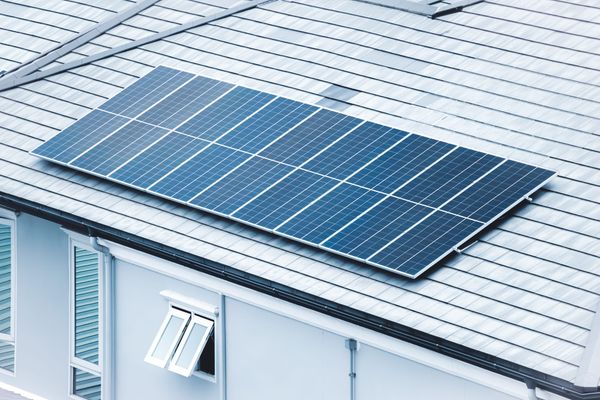
For homeowners electrifying their homes, solar panels are a great addition. However, updating your home can be challenging. That’s why, next month, Reep Green Solutions is hosting a workshop to help homeowners make sense of solar panel technology.
Set for June 10 at the Woolwich Memorial Centre in Elmira, Reep’s solar workshop will feature two speakers: Brendan Schaefer, operations manager and programs advisor at Reep, and John Watson, a renewable energy consultant at Bluewater Energy Inc. After a presentation on solar panel technology, they will be available to answer any questions from participants.
The solar power generation workshop is part four in Reep’s Going Electric series, dedicated to helping homeowners transition their homes to be more sustainable.
Teresa Cornwell, manager of customer experience at Reep, explained that for many people transitioning to electric energy in their homes, solar panels are the next step toward greening the grid.
“One of the big environmental benefits is having a fairly clean electricity source that you’re using in your house, and especially with our other workshops where we’ve been encouraging people to get off natural gas and to use electricity,” said Cornwell.
“This really ties in that we need more electrical capacity built if everyone switches over from natural gas, and this is one way to sort of counteract that.”
Beyond explaining the benefits of solar panels, the workshop will provide homeowners with clarity on whether they should make the switch to solar.
“We’re going to talk about the different incentives that are out there, and how to determine if it actually does make sense for you to [invest in] solar. It might not be worthwhile for everyone,” said Cornwell.
While solar panel technology has grown rapidly over the past few years, whether or not to install them depends largely on the roof of your home.
“They’re not going to generate that much electricity if the sun isn’t going to reach the roof very well.”
Factors such as the roof’s angles, the placement of vents, and shading should all be taken into account when deciding whether to invest in solar panels for your home.
“There’s also a bunch of confusion on how tying solar into the grid works, and the grants and incentives [available] to do that,” Cornwell added.
“Some of that has to do with the incentive programs that have changed for how much solar power you are allowed to put on your roof and how that is done.”
Through the Home Renovation Savings Program, homeowners can receive up to $5,000 in rebates for rooftop solar panels. There is also a Net Metering Program, which allows homeowners to sell excess power back to the grid. Homeowners then receive credits on their electricity bill for the excess amount they sold back.
“Some people, especially in rural areas, are installing batteries to help with power outages, and to sort of offset that,” said Cornwell.
Adding a battery to a solar panel provides storage for excess solar energy. This means instead of going back into the grid, the electricity is stored so you can use it later. Under the Home Renovation Savings Program, installing a battery also qualifies homeowners for a $5,000 rebate.
“The overall goal is to give people a lot of the information to decide if they’ll want to install solar, to look at it closer, and to reach out to the solar companies,” said Cornwell.
The workshop is free for anyone to attend. For more information, visit www.reepgreen.ca.