From unpredictable weather and pest infestations to determining the right time to plant crops, farmers are constantly navigating an unpredictable landscape. Now, technology has helped ease the burden of some of these challenges, with drones and AI becoming powerful agricultural tools.
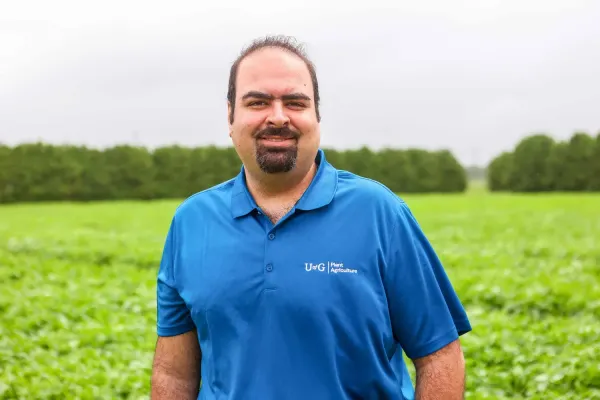
“What changed in the last 10 years is that we now have tools. We have innovative tools and equipment that can answer all those kinds of uncertainties, and that can address some of the problems that we faced before,” said Dr. Mohsen Yoosefzadeh Najafabadi, a dry bean breeder and computational biologist in the Ontario Agricultural College.
The tools he refers to are drones and AI, which have increased agricultural efficiency. Drones are a great tool for farmers to scout fields for weeds, disease, pests, and crop planting. Once, this job would have only been possible with boots on the ground. Now farmers can rest their feet while drones quickly scan the field.
“When we are flying drones, we are able to see what the soil type looks like and what the moisture level is before planting. Then we can match this kind of information with our historical data to predict the exact timing of planting. So, this is one way that drones can help farmers find the best planting time,” said Yoosefzadeh Najafabadi.
One of the major benefits of using drones is their efficiency. They scan the environment quickly, cover ground faster than a tractor and can see more than the naked human eye. Drones can also detect issues in plants before they become a visible problem.
“When we see yellowness in the field, it means that the plant has already been exposed to stress. It can be fungi, it can be viruses, it can be nematodes, it can be anything, and the plant has already shown some level of resistance and fought with that,” said Yoosefzadeh Najafabadi.
“By the time we are seeing these symptoms, it’s not a good time to apply herbicide.”
Once a plant starts to turn yellow, it has already entered a stage of dormancy, or metabolic shutdown and is no longer actively absorbing or circulating nutrients.
Drones use advancedsensors to measure invisible changes in plant physiology, such as reduced chlorophyll, increased leaf temperature, or changes in water content, which alert farmers that the plant is in an early stage of stress. This allows them to treat the plant before the stress becomes a problem.
The intersection of farming and technology is at the heart of Yoosefzadeh Najafabadi’s research, which combines a range of topics, including plant breeding, artificial intelligence, and climate-scenario modelling. His goal is to develop more resilient, high-yielding bean cultivars in Ontario. Currently, he has 20 projects on the go in his lab, all of which revolve around addressing complex agricultural challenges with technology.
“In every project that I’m designing, the use of new technologies such as drones and AI is on each of these proposals. Some of the projects we’ve already finished, like the BeanGPT,” said Yoosefzadeh Najafabadi.
BeanGPT is a platform he designed that is similar to ChatGTP but for bean breeders. Breeders can pose questions to BeanGPT and receive insights based on decades of bean research. The platform is built on 314,000 scientific articles about beans, including approximately 100 million words of research from around the world.
With BeanGPT, Yoosefzadeh Najafabadi was asked to give apresentation to the Ontario Bean Growers.
“They were so interested to know how they can use AI in this case,” said Yoosefzadeh Najafabadi.
Farmers were also eager to learn about drone uses. These days, he sees more and more farmers adopting the technology to assist them through the growing season.
“Farmers are showing so much interest in using these kinds of new technologies, because they understand how these technologies can help them.”
While many farmers were initially wary of using AI tools, more are getting on board, seeing how the new technology can make data collection and farming easier.
“We wanted to make a better life for farmers, and wanted to make life easy for everyone, specifically for farmers and growers. And I’m expecting that, in the near future, everything will be handled automatically,” said Yoosefzadeh Najafabadi.
While farmers will need to supervise all these new techniques and technologies, in the future, there may be no need for them to be in the field.
“Farmers can just sit on their couch and supervise everything that happens in the field.”