
There is a growing divide in the modern gardening community: naturalize and embrace the wilder side of nature, or manicure and maintain a perfectly orderly lawn.
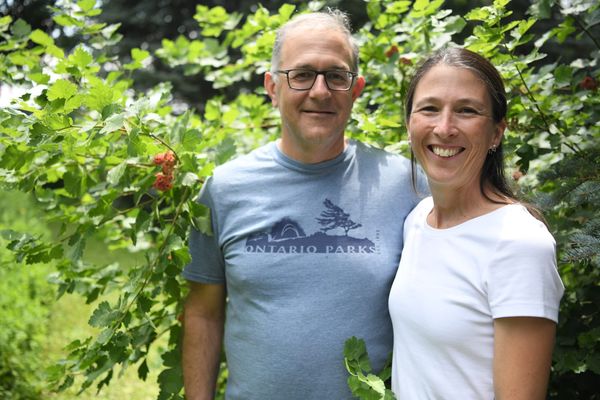
For Katharina Richter and Clark Koch, the homeowners of 254 Arthur St. S. in Elmira, the decision was simple. After purchasing their property years ago, they decided to transform their conventional yard into a thriving urban forest. Over the years, they have introduced a diverse array of flora, including sugar maples, yellow birch, butterfly weed and fly honeysuckle.
The decision was not driven solely by aesthetics. Instead, it represents a dedicated environmental effort that contributes directly to local climate resilience.
“I think it’s a good thing to do for the environment, and it’s creating wildlife habitat,” said Richter.
To date, she and her family have planted more than 40 species of native trees, shrubs, and wildflowers across the property. Building this natural landscape from scratch was a monumental task that required bringing in three truckloads of topsoil. Fortuitously, local infrastructure developments worked in their favour.
“At the time, the township was putting in the bathroom at Gibson Park. So, they needed a place to dump topsoil. It was perfect timing,” said Richter.
In addition to the plantings, the couple established numerous brush piles around the area to serve as a deliberate refuge for wildlife. They also have a few chickens.
The transformed yard has become a natural oasis for birds and butterflies. Richter noted peppermint and raspberries have really taken off in the space. The return of local fauna has been a rewarding validation of their hard work.
“We’ve had so many different wildlife – squirrels, rabbits, chipmunks. We had a mink here. We had a fox all winter,” said Richter, adding that they always have many birds, too.
“We had warblers this year. We’ve heard owls from our property, from our house.”
A practical benefit of this naturalization process is significantly lower yard maintenance. The property spans three-quarters of an acre, and contains quite a few trees. For the most part, nature takes care of itself. That doesn’t mean no effort is involved, however. Richter and Koch make sure the yard is orderly, mowing parts of it and keeping a wood-chip trail for those who cut across it.
“We still mow a lot. We make sure that the yard is tidy. Some people say this is messy, but I think it’s beautiful,” said Richter, adding that she always makes sure to pick up the litter in the yard.
“I was surprised how many people don’t pick up litter in their yards and around the sidewalks and so on. I feel that’s uglier than naturalization.”
Since the area was naturalized, many community members have stopped by to express how much they enjoy the urban forest.
“I’ve lived in Elmira for a long time, and lots of people say they really like this and they like what we’re doing,” said Richter, adding a special moment happened for her a few years ago when someone even gave her a Christmas card in honour of the naturalized garden.
While many neighbours are delighted by the urban forest, the project has also faced resistance.
“We have someone call bylaw on us most years.”
After the bylaw visited the property, Richter said a compromise was reached, and they agreed to cut more grass around the perimeter of the yard with a gas-powered mower.
Shortly after the bylaw was called in 2021, Richter decided to write a letter to the Township of Woolwich staff and council, noting that some of the bylaws were outdated.
One of the bylaws Richter outlined was bylaw 23-2012, which states that yards are to be maintained free of any “undesirable material.” The definition of “undesirable material” includes “growth of weeds in excess of 15.24 cm and dead, decayed or damaged trees or other natural growth and the branches and limbs thereof which create an unsafe condition.
In her letter to council, Richter framed her property not as a violation, but as a necessary response to a global crisis.
“We know the climate is changing. We know biodiversity is declining. We are experiencing more frequent extreme weather events, storms, droughts, and high temperatures. Native species are declining due to invasive species, diseases and human disturbance. Wildlife populations, especially birds and bats, are plummeting. We are called upon to change our lifestyles to rescue our environmental footprint, to plant trees, to naturalize our gardens. We take this call very seriously,” said Richter in her letter to Woolwich council.
“So, we get a lot of people saying this is a nice thing and good thing, but we have one person. It’s always just one person, but we don’t know who. But the bylaw has to address it because there’s outdated bylaws.”
For Richter, the naturalization of her yard is an ethical statement and part of her stewardship of the land.
“As a Christian, I think too, we have the responsibility of caring for creation.”