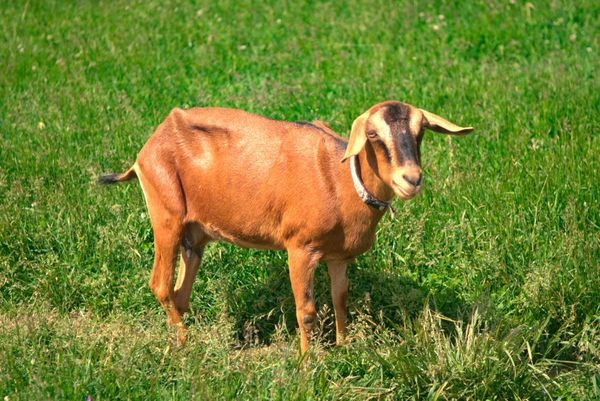
Ontario is about to launch a new marketing board for goat dairy, aiming to unify the province’s rapidly growing sector. Approved in April and currently being implemented, Dairy Goat Farmers of Ontario (DGFO) was created to fill a critical advocacy gap.
“Having that unified voice to engage with the government and influence agricultural policy is something that has been lacking, and they were really looking for a [goat] dairy specific voice with the government,” said Lindsay Dykeman, general manager of the Ontario Dairy Goat Co-operative.
Unlike the Dairy Farmers of Ontario (DFO), which uses supply management to control prices and sets quotas for dairy farmers, the DGFO will be a levy-funded promotional and advocacy group with no power to manage milk prices, supply, or production quotas. The levy will go to fund research, promotion and consumer awareness around goat dairy.
“There is no supply management, no price-setting, no volume control; that is completely off the table. So the Dairy Goat Farmers of Ontario will look a lot more like the Ontario sheep farmers or the berry growers that are more of just a producer advocacy association,” said Dykeman.
A primary goal for the new board is securing a business risk management program, a safety net currently unavailable to dairy goat producers.
“When you look across Canada, about 90 per cent of the goat milk in Canada is produced right here in Ontario, so that does lead us to be a bit of a leader within the country. I think that we need to be letting them (government) know what we’re looking for: the business risk management and some of the research that we’ve been asking for,” said Dykeman.
However, the transition has met strong resistance from Ontario Goat, an existing organization representing the province’s meat, fibre and dairy goat farmers. Ontario Goat argues the decision went ahead despite unresolved questions raised during consultations, and points to a distinct lack of transparency in the voting process.
In April, the Ontario Farm Products Marketing Commission mailed ballots to 198 eligible Grade A goat milk producers. To pass, the proposal required approval from 66 per cent of voting producers, representing at least 50 per cent of the milk production.
Ontario Goat expressed serious concern that many Amish and Mennonite producers could not participate due to religious objections to voting, meaning the results may not reflect the views of the entire sector. According to Michele Bowering, president of Ontario Goat, some 120 of 198 goat dairy farmers were Amish and Mennonite.
Bowering also expressed frustration over the Commission’s authority to push policy through regardless of the exact number of votes.
“They have the right, even if it has not passed, to say, ‘Well, we think it is close enough, we are going to put it through.’ That is wrong,” said Bowering.
While Ontario Goat formally requested that the commission release the aggregate voting results, it has yet to do so.
“Ontario Goat believes producers should not be asked to accept such a significant change to the governance of their industry without full disclosure of the voting results that formed the basis for the commission’s recommendation,” said Bowering.
Beyond transparency, critics are worried about rising costs for farmers. Under the previous Ontario Goat model, a voluntary membership cost roughly $100 per year. In contrast, the DGFO will mandate a per-litre license fee. Estimates suggest even small farms with fewer than 200 goats will face an annual cost of $602.
Bowering said she fears the new marketing board will simply duplicate work already being done. Ontario Goat already handles advocacy, government relations, education, promotion and industry development. The difference is that they handle it for the meat, dairy and fibre goat industries. She argues that splitting the sector weakens its political leverage.
“The interests of the dairy and meat sectors are closely connected and are best represented together,” said Bowering.
“Ontario Goat believes the goat industry is strongest when all producers work together through one inclusive organization rather than creating additional divisions within the sector.
“Ontario dairy goat producers deserve a governance model that is transparent, accountable, and truly representative of the entire industry.”