
Last year, there were ten deaths in Ontario on farms, more than double the previous year’s four deaths on farms. The increase in fatalities for agricultural workers has brought a focus “back to basics” for farm safety.
“Because we had a significantly higher increase last year in workplace fatalities in the agricultural sector in the province of Ontario, the Ministry of Labour Immigration Training and Skills Development (MLITSD) has an initiative, primarily for the agricultural sector, called Back to Basics,” said Jay Remsik, a Health and Safety Consultant with Workplace Safety and Prevention Services (WSPS).
The program focuses on hazard identification, equipment safety, and legal responsibilities to protect all agricultural workers. WSPS helps farmers prepare for farm inspections by focusing on these core aspects, covering topics such as safety related to machinery and equipment.
During a farm consultation, Remsik asks questions like, “Is your equipment properly maintained? Is someone inspecting that on an annual basis?”
“They’re also focusing on machine guarding, so think of power takeoff shafts. There’s a shield on there, but gradually over time, with wear and tear, that shield could become damaged, they will be focusing on that,” said Remsik about what the MLITSD will be looking for in their farm inspections.
Hazard assessment is a big part of what WSPS promotes. They recommend agricultural workers take up the “Stop, Think, Act” framework, which means stopping to consider hazards, thinking about how to control them and acting safely.
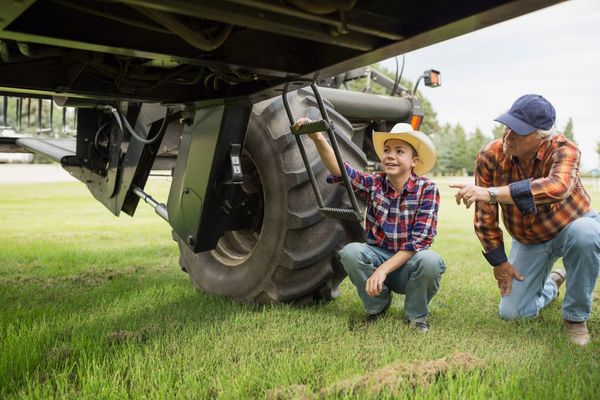
Circle checks are another important action for foundational farm safety. These are visual inspections around heavy machinery, tractors, and blind spots before starting a vehicle to prevent run overs.
Being struck by a farm vehicle is still the leading cause of death for agricultural workers in Canada. These include machine rollovers (when a tractor flips over) and machine runovers.
Last year, Remsik said at least one of the deaths was because of a machine runover.
“In this particular case, it was a temporary foreign agricultural worker that was struck by a van on the farm, and the van was taking some other temporary foreign agricultural workers off site back to the bunkhouse,” said Remsik.
A major driver of these types of accidents is the number of people on farms during the busy harvest seasons. In these cases, Remsik recommends that farmers’ workers wear high-visibility vests to be more noticeable to machine operators.