
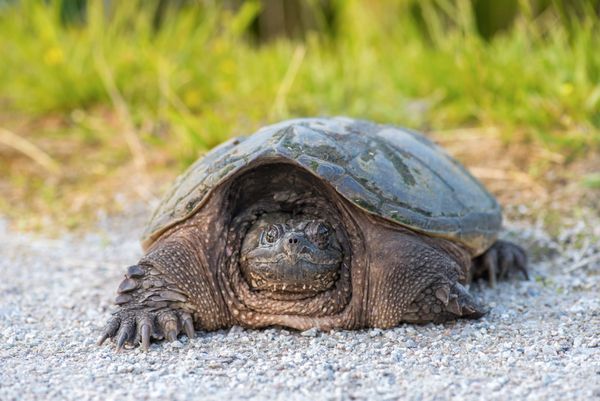
A group of ordinary Ontarians is helping save injured turtles by doing something many people do every day: driving. The only difference is the unique passenger in their vehicles.
Since 2009, the Ontario Turtle Conservation Centre’s (OTCC) Turtle Taxi program has been helping transport injured turtles across the province to the Kawartha Turtle Trauma Centre in Peterborough.
The only requirement for volunteering is having access to a vehicle. Robin Waldman is a turtle taxi driver from Kitchener who has been volunteering with the service for about a year.
“I really like turtles, and I wanted to do something. I had just retired, and it seemed like a good thing to do, especially since they’re all pretty much endangered.”
She added that volunteering with the service is easy. Once volunteers sign up to be turtle taxi drivers, they receive an email with a list of driving routes needed to transport a turtle, and they can respond if available.
“This year, I’ve only done about five routes, and none of them are long routes. They are broken up into various legs. Somebody might drive from Peterborough to, let’s say, Mississauga, then somebody else Mississauga to Cambridge, then somebody else Cambridge to London,” said Waldman.
With turtle nesting season underway, June has been a busy month for the Ontario Turtle Conservation Centre and its taxi volunteers. Over the weekend of June 8 and 9, the centre’s intake surpassed 700 injured turtles.
“They [turtles] are probably the most imperilled group of vertebrates in Canada, for various reasons, but certainly habitat loss, and associated with habitat loss is the road network that we have, which takes thousands and thousands of turtle lives every year,” said Don Scallen, a turtle conservation advocate and author of Nature Where We Live.
According to the Ontario Turtle Conservation Centre, about half of turtles hit by cars are on their way to lay their eggs. Female turtles in search of a good spot to lay their eggs often have to cross roadways since many roads cut directly through their natural habitats and wetlands. When turtles are in a vulnerable position on the road, they’re at a high risk.
For drivers, one of the best ways to help turtles is to slow down. Unlike other wildlife, turtles aren’t going fast and are easy to avoid at low speeds. If you do happen to see a turtle on the road, Scallen recommends picking up the turtle and moving it in the direction that it is going.
“The only ones to be concerned about are snapping turtles. It needs to be emphasized that even if they hit you on the finger, they’re not going to take your finger off. It would hurt. You don’t want that to happen. So, there’s various things people do,” said Scallen.
“Some people will keep a little bit of carpet in their trunks, and they’ll encourage the snapper onto the carpet, then pull the carpet. Other people will try to gently lift them with a shovel.”
Some recent efforts to help mitigate turtle mortality on roadways include installing barrier fencing on highways. These barriers are already in place in areas like Port Franks and the Long Point Peninsula.
“The barrier fencing along roadways [force them] to pass through turtle habitat underpasses, which I believe are very expensive to put in, but they’ll, the fencing will direct the turtles. Basically, they’ll travel on the fence until it hits an underpass and then cross under the road,” said Scallen.
The Ontario Turtle Conservation Centre recommends that anyone who finds an injured turtle should place it in a clean, well-ventilated plastic container without food or water, as adding these can create more injuries or complications for the turtle. Then, call the centre at 705-741-5000 and leave a message noting the exact location where you found the animal.
On a positive note, Scallen said that the efforts he has seen in turtle conservation across the province, from the turtle taxi to mortality mitigation projects, represent “one of the most hopeful grassroots conservation efforts ever in the province.”
“It’s just ordinary Ontarians trying to make a difference, and they’re your turtle taxi drivers and your nest protector people, and so that is really hopeful. Without that widespread stewardship, you can bet that turtle populations will just continue to decrease again, especially in urban areas.”