

Garlic mustard is a good example of how “the road to hell is paved with good intentions.”
When Europeans brought the plant to North America in the 1800s, they used it as a tasty herb for cooking. Nobody anticipated that it would become one of Canada’s most aggressive invasive plants, taking over forest floors and outcompeting native plants.
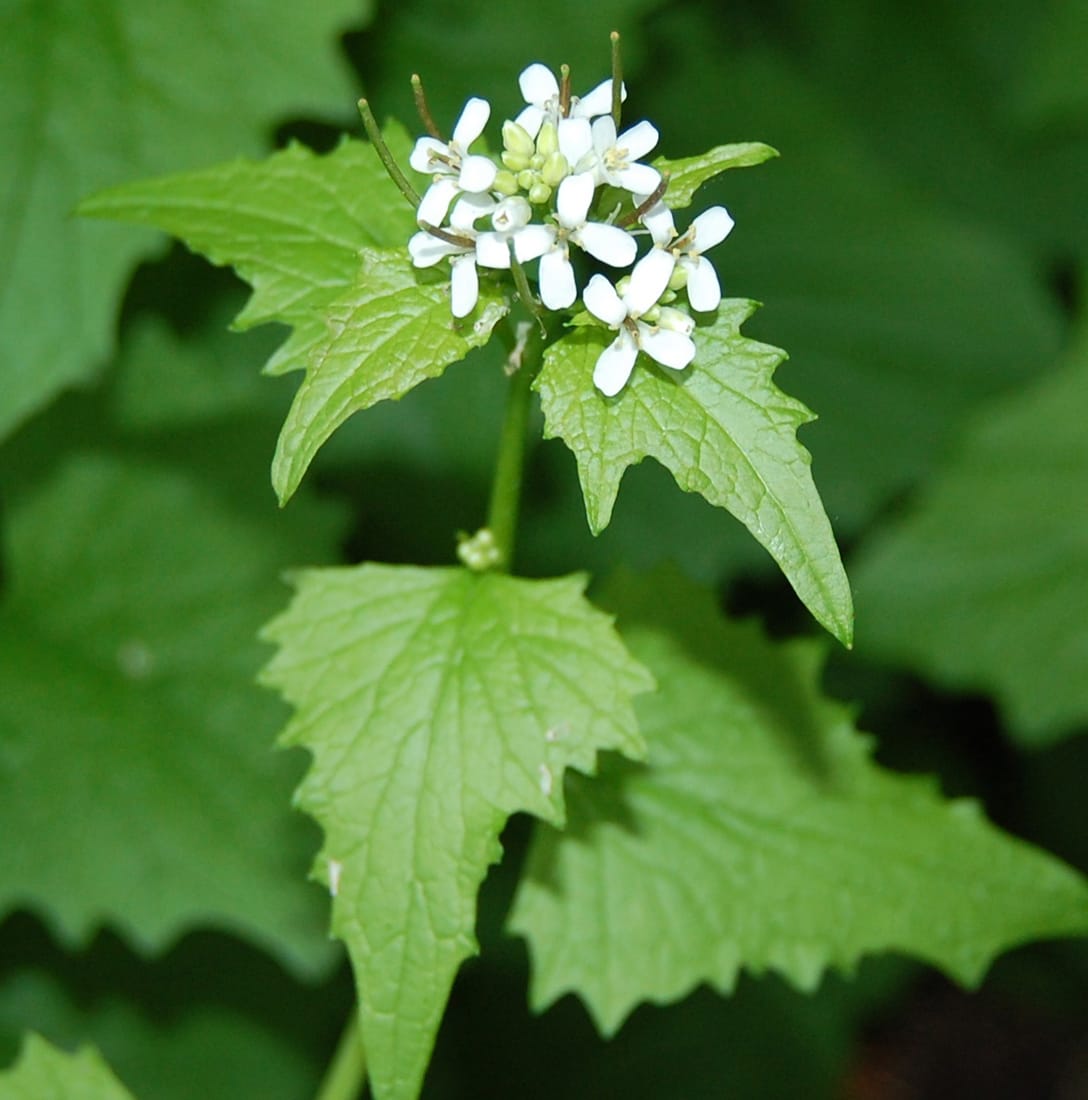
Local volunteers on the Township of Woolwich Environmental Enhancement Committee (TWEEC) are fighting the good fight by helping the community get rid of this pesky plant. On May 14, TWEEC held a garlic mustard pull at Elmira’s Victoria Glen Park in partnership with Woolwich Township. This marked the third year of a community garlic mustard pull in the area. Volunteers showed up at 4 p.m., ready to pull all the garlic mustard from the park.
“Last year, we managed to get all that we could find and ended up going onto the Kissing Bridge Trail to keep going,” said Connor Ehrlich, the chairperson for TWEEC.
This year, volunteers noticed the garlic mustard was more visible. However, the plant was still not nearly as prevalent as it was in previous years.
“I think there’s less here than there was two years ago. Two years ago, it was like a wall of garlic mustard,” said Jenny Soehner, a member of TWEEC.
That was the second garlic mustard pull TWEEC organized this spring. The first one took place in St. Jacobs on May 3 at Riverside Meadows Park. Ehrlich noted that around 13 community volunteers came out for that pull.
Garlic mustard pulls are relatively easy compared to other invasive species pulls, such as buckthorn, which have notoriously dense root systems. Garlic mustard plants are also easily identifiable. The more mature ones have small white flowers with four petals and triangular, coarsely-toothed leaves.
To get started pulling garlic mustard, all participants needed were some gloves and maybe a trowel to help loosen stubborn roots.
“It’s not hard. Children can do it,” said Soehner.
“I brought my kindergarten classes to Victoria Glen with gloves and bags, and they just yanked it out.”
Garlic mustard is a big threat to biodiversity in Ontario’s forests. Just a single plant can produce thousands of seeds that can remain viable in the soil for several years, making it incredibly difficult to eradicate.
According to the Invasive Species Centre, in just five to seven years, garlic mustard can enter, establish itself and become the dominant plant in a forest’s understory (the layer of plants in a forest that grows above the forest floor but beneath the main tree canopy). Garlic mustard’s roots have also been studied and shown to produce chemicals that prevent the growth of other plants.
“It’s a never-ending battle, it seems like, but we are making a dent. It’s been three years now that we’ve been doing these garlic mustard pulls, and before this, it was just individuals doing it; it wasn’t really an organized event, so three years in, we’re making a dent, and we’re always progressing on our ideas and management of it,” said Ehrlich.
He added that next year, the team hopes to introduce native species when they pull garlic mustard. When hand-pulling is combined with planting native species, garlic mustard elimination has been more effective.
“We’re hoping to introduce native species that might compete with garlic mustard to help push it back a bit. So, we’re looking at piloting that, but there’s a lot of different management methods,” said Ehrlich.
Other control methods for garlic mustard include clipping the flower heads to prevent seed production. However, this method has to be repeated multiple times a year to clip the new flowers as they emerge.
“Prescribed burns work really well, too,” Ehrlich added.
“But we’re kind of in a residential area, so I don’t think we’ll be doing prescribed burns here, but on the Elmira Nature Reserve, they do prescribe burns normally once a year, and that’s helping with garlic mustard; that’s a good method for larger areas.”
Once garlic mustard is removed, an important part of preventing its spread is proper disposal. Most plants need to be solarized, which means placing them in a black garbage bag and leaving them in the sun for one to three weeks, effectively drying them out and preventing the plant from seeding.
In Waterloo Region, residents can fortunately skip this step and just dispose of the plants through the municipal yard waste program, as the region’s commercial composting process reaches temperatures high enough to kill weed seeds.
An ongoing issue Ehrlich cited that is contributing to the spread of garlic mustard is residents dropping their leaves and dead plants from their personal gardens into public spaces and forests.
“Just because it’s a natural material doesn’t mean it belongs in our forest. That’s how invasive species are introduced to our forest, and the Region of Waterloo has one of the best yard waste programs. You are allowed an infinite amount of yard waste bags on your curb,” said Ehrlich.
“So, once we’re done here with our pulling, all of these yard waste bags will go on to our yards for pickup, because you’re allowed an infinite amount. So, there’s no excuse to be dumping plants into our forest.”