
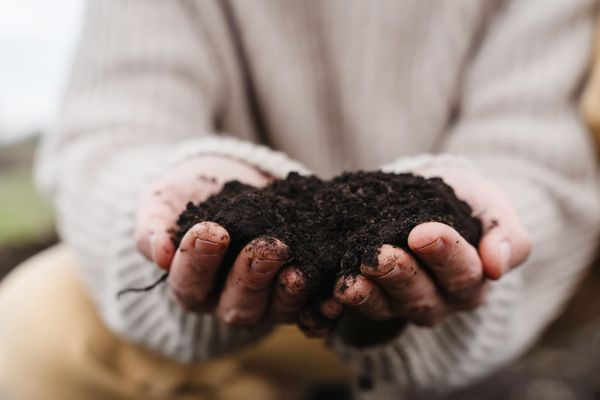
Canada is taking steps to protect soil health with the government’s announcement of plans to develop a national soil health strategy starting this spring.
The plan was proposed last year by Sen. Robert Black, though action on soil health is something he’s advocated for since his appointment to the Senate in 2018.
“It’s not my idea. It’s what we heard was necessary,” said Black of the impetus for his action.
Black, federal Agriculture Minister Heath MacDonald and Soil Conservation Council of Canada (SCCC) representatives were on Parliament Hill March 26 to announce the government’s commitment to a soil health strategy. The development comes based on recommendations from the 2024 Senate report titled “Critical Ground,” which found that soil health protection was an issue that Canada should not wait to tackle.
Black and the Standing Senate Committee on Agriculture and Forestry spent 18 months examining the state of Canada’s soil health. Published in June 2024, the report came 40 years after the first and only other Senate soil study, which was published in 1984. While soil health was identified in the original Senate report, the 2024 version found it is a more pressing issue.
“We heard that soil is the foundation of Canada’s agriculture and agri-food systems. That it is as important as the air we breathe and the water we drink,” said Black, who lives near Fergus.
“I think it’s a three-legged stool. We hear a lot about air. We hear a lot about water, and it’s time we heard about the third leg. What we also heard was that there isn’t another 40 years to get this right.”
A 2015 report from the UN Food and Agriculture Organization (FAO) found that a third of the world’s soil is degraded moderately due to erosion, nutrient depletion, acidification and pollution, partly driven by unsustainable agricultural practices such as intensive tillage, monocropping, excessive chemical use and poor irrigation management. The report warned that if nothing changes by 2050, 90 per cent of the planet’s topsoil could be at risk.
“That’s only 24 years away, so we’ve got to get this right. We’ve got to protect our soils. It’s the foundation of everything we do,” stressed Black.
“The soil that we walk on, and we wreck, in some cases, is the foundation of all life. Ninety-five per cent of our food products come from the soil, or are fed by the soil, and so we’ve got to protect it.”
A big takeaway from the 2024 Critical Ground report was the importance of not making a “one size fits all national soil health strategy,” because of the vast differences in types of soil across the country. Variations in soil texture, structure, drainage, and fertility mean the soil must be treated differently for optimal health.
Susie Miller, the interim executive director of the SCCC, emphasized the need to consider different farmer incentives.
Cost is a major factor to consider in decisions regarding soil health. If a farming practice is too risky or too costly, it will be less feasible for farmers to implement.
“The incentives are what we need to understand. And this is where the voice of the farmer is really critical,” said Miller.
She added that a big focus of developing the national strategy will be bringing together different perspectives, from farmers to developers to researchers and government and figuring out how to work together on a path forward for soil health.
Starting this spring, Agriculture and Agri-Food Canada (AAFC), in collaboration with the SCCC, will start consultations engaging provinces, territories, agricultural groups, producer organizations and academia to identify regional priorities. The goal is to fill current knowledge gaps to determine the best way to encourage sustainable farming practices for soil health.
“The stage that we’re at now is that we are in the process of building four separate subcommittees to actually write the strategy,” explained Miller.
The subcommittees will be established around four subject areas identified as priorities for developing the national soil strategy: extensions and learning, incentives and resources, data and measurement, and research.
“The intention is that we would work within these committees using a broad range of volunteers, and develop a draft that says, ‘OK, these are the priorities. These are the gaps. These are the things that work well. These are the ways that we can fill the gaps.’”
The goal is to launch the strategy early next year, during the non-farming season from January to March, including the establishment of an industry-led roundtable.
“The government is a partner in that they’re one of many that are at the table. They have been there since the beginning, in terms of our working group that’s been leading all of this. And their announcement, although I don’t have any specific details at this point, is a stronger commitment to a stronger profile within Agriculture and Agri-Food Canada. It is connected to Senator Black’s work,” said Miller.
Black noted that he feels hopeful, given the positive feedback he has received so far on developing a national soil health strategy.
“I look at how it’s been well received across this province and across the country. I’m just delighted. I sent a copy of the [Critical Ground] report to 220 rural municipalities in the province last spring. So, in the spring of 2024 and 2025, I just [wanted] to raise the issue of protecting soil health amongst our rural municipalities. And 21 of them have passed resolutions supporting the report and the recommendations in the report. To my mind, that speaks volumes about how all levels of government are moving forward and thinking positively about the model,” said Black.