
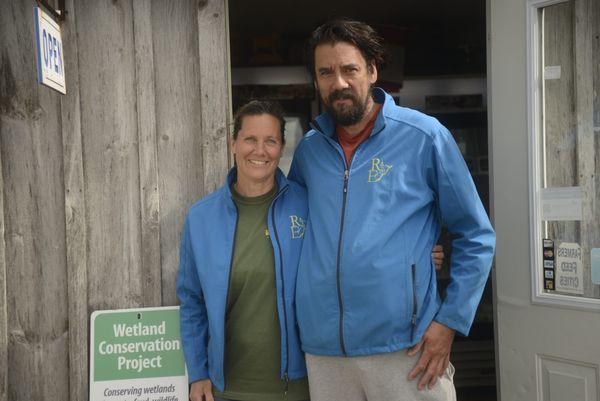
If you drive just north of the region to Arthur and pay a visit to River’s Edge Goat Dairy Farm, the vibrant green pastures and friendly herd are quick to convince you that bigger isn’t always better.
Run by Katie Normet and Will Makxam, River’s Edge is a small but mighty operation and a regenerative farmer’s dream. They have a unique self-serve storefront where they sell the products they make onsite, including goat cheese, milk and soaps.
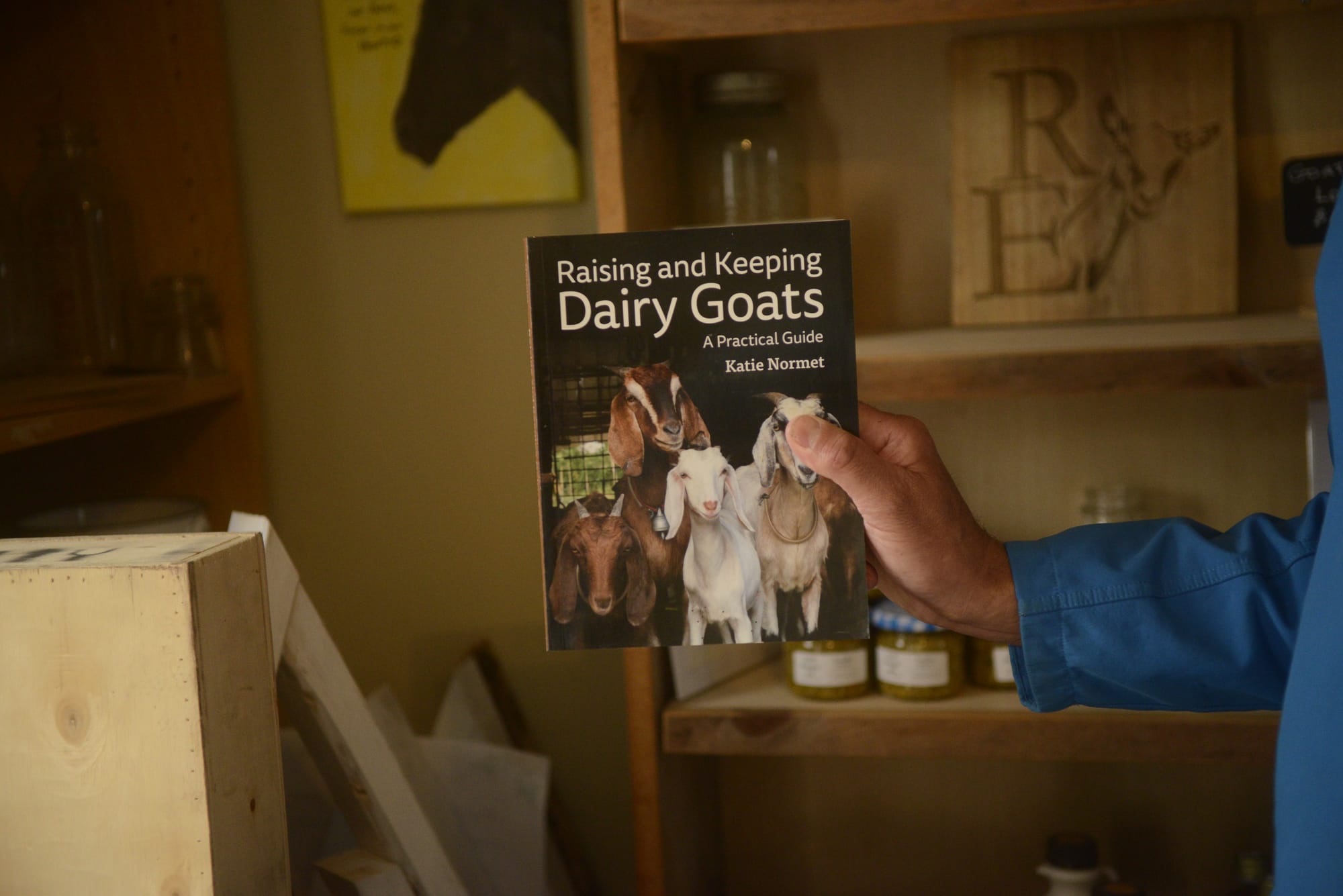
Unlike larger operations that aim to have 1,000- 1,200 goats to milk, River’s Edge intentionally caps its herd well under triple digits.
“We’re quite happy with 65 to 75 [goats] max,” said Normet, adding that on the farm, they just use regenerative inputs.
“We try to be really resourceful and get as many inputs here on the farm as we can.”
One of those key inputs is a massive wood chip pile introduced five years ago to combat soil degradation, a major talking point in modern agriculture.
“Conventional farming typically will always take the layer of nutrients off the soil. I like the analogy that farmers are like strip miners, but they are never reintroducing nutrients, so by bringing wood chips to the farm that’s from outside, we’re actually reintroducing nutrients to the soil, long term,” said Makxam, pointing to wider anxieties echoing through the agricultural sector regarding the longevity of global food production.
“There’s a lot of scare that we only have 40 years of agriculture left in the country, and part of it that’s not really discussed is actually the nutrient density of our soil has been depleted for the last 80 years. So when we started doing industrial commercial farming, we’ve basically been taking out all the small micronutrients out of it, like the copper, selenium.”
The narrative of rapidly disappearing topsoil stems from a widely cited 2014 warning by the UN’s Food and Agriculture Organization (FAO), which noted that intensive tilling and continuous monocropping accelerate topsoil loss far beyond natural replenishment rates. Modern FAO projections warn that 90 percent of the Earth’s topsoil could be at risk by 2050.
Normet agreed that industrial practices have disrupted the ground from the microscopic level up.
“Even bigger than that is, we’ve destroyed the natural micro ecosystem that’s there. There’s an ecosystem we can’t see. It’s all microbiology that’s in that soil that’s been depleted. Why? Because of all the tilling, all the chemicals have been put on. It’s just not favourable to grow that microbiology in the soil,” said Normet.
“But it’s the microbes that actually make the nutrients bioavailable to the plant, and that takes time to build. So, we’ve always been in for the long game. I’m always looking decades into the future, not the next year or the next five years. I’m always decades ahead.”
The goats themselves are central to this restoration loop. Animals at River’s Edge are 100 per cent pasture-fed during the warm months, and their manure enriches the soil and supports a diverse, thriving local ecosystem.
The couple’s environmental stewardship extends beyond the soil. Upon moving to the property, Normet rallied a crew of friends and family to plant 10,000 trees across the acreage.
More recently, the farm partnered with Ducks Unlimited Canada and the Grand River Conservation Authority to transform a perennially soggy pasture into a natural wetland. For Normet, seeing the habitat come to life fulfilled a 25-year dream.
“It looks quite natural with these nice little berms and little inlets for ducks to have their babies,” said Makxam.
While it stands today as a picturesque, functional farm, building River’s Edge was a decades-long climb. Normet always knew she would be on a farm, and goats were her way to support her first love, horses.
“Goats were my economics to keeping horses,” said Normet.
“When I was two years old, my mom lost me downtown Toronto, and you can imagine the panic you’d have when losing your toddler in downtown Toronto. We were there for the Christmas parade, and she found me. I was latched onto the leg of a mounted police horse, and the officer was laughing hysterically. My mom was freaking out, and she’s like, ‘I knew I had a special child.’”
When she was growing up, she had one driving question in the back of her mind, “How am I going to get onto a farm?”
After university, she attended a career day hosted by the provincial ministry of agriculture, where she learned how to make her dream a reality. After raising cows, River’s Edge Farm bought its first goats in 2001.
“Then we built the milk house, got all the milking equipment, got the goats, that was a bigger investment,” said Normet.
Today, both Normet and Makxam say the rewards of keeping the operation small extend far beyond environmental sustainability; it is about lifestyle sustainability, too.
“I’m hoping our next generation here is going to take what we’ve created. Look at this as an awesome, profitable, sustainable, fun business where you still get to live life like you get to be fulfilled,” said Normet.
“You can still grow it, and keeping that mindset of I’m still going to go to my kids ball games, I’m still going to go watch hockey, I’m going to be able to go skiing for myself, because I love to ski – we can still do all these things, plus farm, and going from that mindset, because you can.
“So many people look at it this or that, and I’m like, well, ‘how do we do this and that?’ – there doesn’t have to be a choice there. By staying small, that’s the way we’ve been able to do this and that, and I really feel that we’ve all of us have been able to be far more impactful in our communities.”